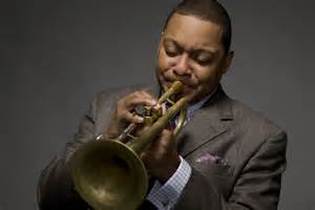
One of his most popular and particularly strong swinging recordings from the 80s wraps the listener in that amazing group sound that is the hallmark of Wynton Marsalis. Fiery recordings of the musicians and jazz composers called 'The Young Lions': saxophonist Branford Marsalis, called 'Doctone' - pianist Kenny Kirkland, called 'Net Man' - bassist Charnett Moffett, drummer Jeff 'Tain' Watts and of course Marsalis himself with his trumpet.
The Grammy winner for Best Instrumental Jazz Performance with a Band and Best Instrumental Jazz Performance as a Soloist has been remastered from the original analog tapes by Bernie Grundman Studios and pressed on audiophile-quality 180g vinyl by Pallas in Germany, compliments of ORG Music.
One of his most popular and particularly strong swinging recordings from the 80s wraps the listener in that amazing group sound that is the hallmark of Wynton Marsalis. Fiery recordings of the musicians and jazz composers called 'The Young Lions': saxophonist Branford Marsalis, called 'Doctone' - pianist Kenny Kirkland, called 'Net Man' - bassist Charnett Moffett, drummer Jeff 'Tain' Watts and of course Marsalis himself with his trumpet.
The Grammy winner for Best Instrumental Jazz Performance with a Band and Best Instrumental Jazz Performance as a Soloist has been remastered from the original analog tapes by Bernie Grundman Studios and pressed on audiophile-quality 180g vinyl by Pallas in Germany, compliments of ORG Music.
"Beyond the impressive dexterity evident in the peculiar structures of the compositions, there are improvisations of such deliberate order, fire and rhythmic fluidity that the combination of individuality and continuity gives one a sense of a whole in each piece. Because each musician so resolutely uses what has been played to him while making his own contribution, the compositions seem never-ending and are always more than a stringing together of so-called solos. However, the whole thing is crowned by the swing and the lyrical character.
The leader has never played so well on a record before. There's the clearly audible melancholy of his superbly controlled work on the title track, the brashly joyous delight called "Delfeayo's Dilemma," the goblin-like jumble of "Phryzzinian Man," the raw power and texture of "Chambers Of Tain," and the sublime pitch swings of his ballads. Branford Marsalis, like his brother, has taken on many different kinds of swing, from gliding, fluid rhythms to his technique of sweeping Lester Young's coolness and its relaxed elegance into contemporary harmony on "Phryzzinian Man," switching from a superb variation to the brief interlude that introduces him to a creation that is absolutely melodic.
Kenny Kirkland not only accompanies each horn player with different colors, touches, rhythms, and beats, but also proves that there is no pianist under 40 in jazz who can swing harder, be more inventive with linear control, or execute smoother rhythms. Seventeen-year-old Charnett Moffett shocks with his swing and his sound, never losing the thread whenever Kirkland and Watts reset the accents and layer other time signatures. Ron Carter, as usual, delivers flawless work in reinterpreting and developing thematic structures and the harmonic ideas presented in 'Aural Oasis'.
Then there's 'Tain' ("What's Your Name?", "Puddin' and Tain, ask me again and I'll tell you the same." = What's Your Name? - Puddin' and Tain, ask me again and I'll tell you the same.): probably the dean of younger drummers; as the ballads show, he is already a master of timbre on the cymbal, and the swing he puts down, doing a hit on the cymbal at regular intervals on the second half of the two-four time, or adjusting effortlessly when the beat changes, show that he is a man of remarkable instinct and eye for detail. Most importantly, his playing follows the tradition of the blazing hot center of polyrhythm perfected by Elvin Jones.
In summary, this recording is a legacy of craftsmanship, integrity, and passion that initiates idealism. We are all fortunate to have such young musicians playing jazz and treating its greatest demands with such an emotive sense of order." - Stanley Crouch in the liner notes.
We use cookies and analysis tools. This is how we ensure that our website looks and works well. Detailed information can be found in the
privacy policy.